
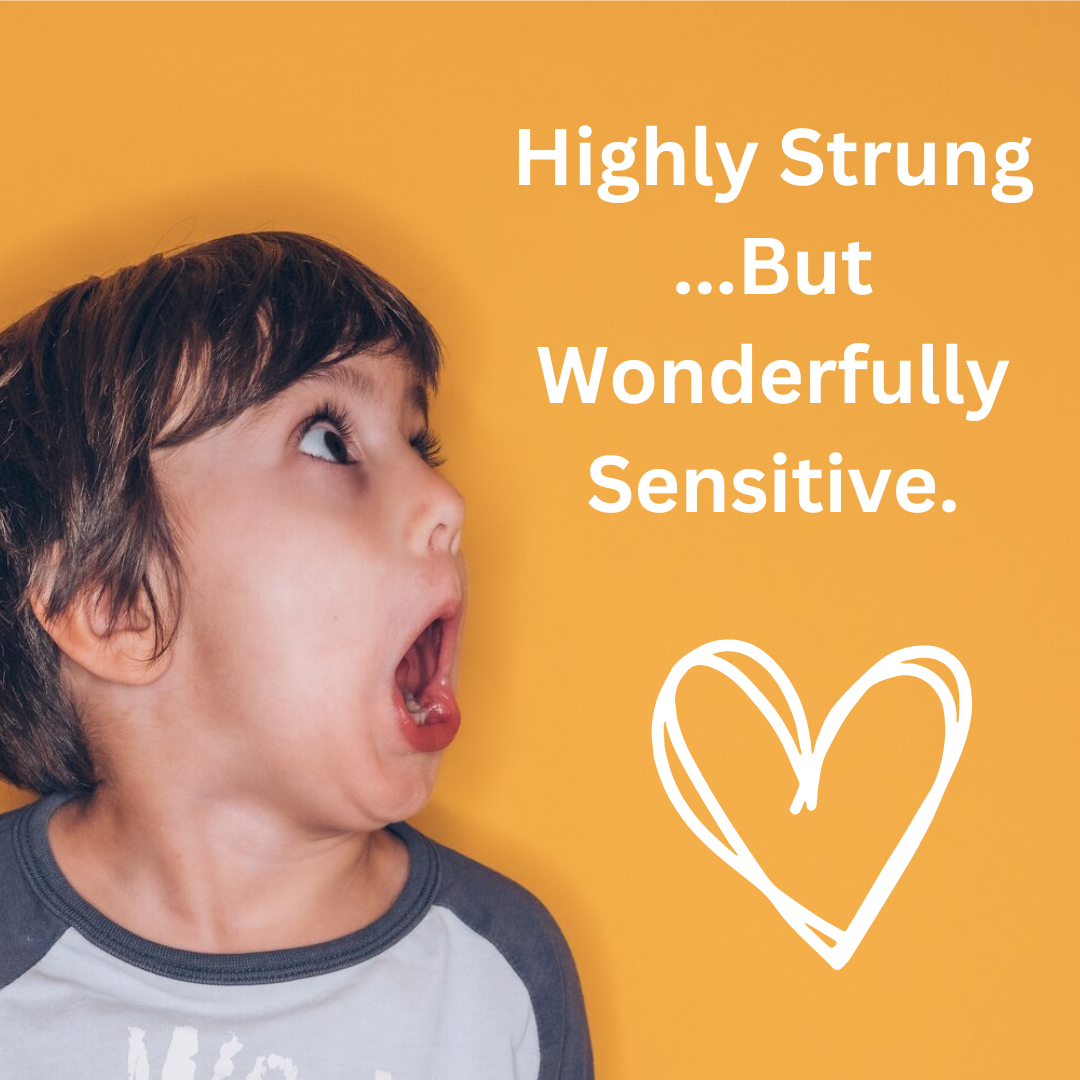
The Truth Behind the “Highly Strung” Child
Have you ever been told that your child is highly strung?
Perhaps they worry about things other children seem to take in their stride.
They can become overwhelmed by things that seem small to everyone else.
They react strongly when something doesn't go the way they expected.
They notice everything.
They feel everything.
And sometimes, it can seem as though your highly strung child is constantly on the edge of becoming upset, angry, overwhelmed or anxious.
You may find yourself wondering:
Why does everything seem so much harder for my child?
And perhaps you've started to wonder whether they are simply too sensitive.
But what if there is something else going on?
What does “highly strung child” actually mean?
The phrase highly strung is often used to describe a child who seems nervous, easily upset or particularly sensitive to what is happening around them.
But for a highly sensitive, deep-feeling child, what we see on the outside can be the end result of a huge amount happening underneath.
Highly sensitive children tend to process information deeply.
They can take in an enormous amount from their environment.
A tone of voice.
A change in plans.
The atmosphere in the room.
Someone else's mood.
A noise in the background.
A feeling in their own body.
Something that happened earlier in the day.
A worry about what might happen tomorrow.
Something that didn't feel fair.
And all of it can matter.
Their little “cup” can become full without us necessarily realising how much has gone into it.
Then something that seems tiny from the outside can be the thing that tips them over.
And suddenly you have a huge reaction to something that seems completely disproportionate.
But the reaction isn't the whole story.
There is usually something happening underneath it.
What looks like a highly strung child may be something very different
A meltdown might look like your child being unreasonable.
But underneath it might be:
“This is too much and I really need your help.”
Anger might look like defiance.
But underneath it might be fear, overwhelm, frustration or something they simply don't yet have the capacity to express.
Withdrawal might look like stubbornness or avoidance.
But it may be a child whose system has simply had enough.
This doesn't mean every behaviour is okay.
It doesn't mean removing boundaries or making life smaller so your child never has to feel uncomfortable.
It means becoming curious about what is happening underneath the behaviour.
What is my child experiencing right now?
What might they be needing from me?
Because when you understand what is really going on, knowing what to do becomes so much easier.
Is your child highly strung, or highly sensitive?
Sometimes what looks like a highly strung child is actually a highly sensitive child whose world is simply being experienced very deeply.
Highly sensitive children can notice subtleties that others miss. They may pick up on changes in tone, facial expressions, tension, sensory input, other people's emotions or the possibility that something might go wrong.
They may also feel their own emotions very deeply.
This can be a wonderful part of who they are.
It can bring empathy, creativity, insight, a strong sense of fairness and a deep capacity for connection.
But when there is simply too much coming in, that same sensitivity can become overwhelming.
This is why a child who seems “fine” one minute can suddenly become tearful, angry, anxious, withdrawn or completely overwhelmed.
It isn't necessarily that they are choosing to be difficult.
Their capacity in that moment may simply have been reached.
The problem with seeing your child as “too sensitive”
When a child repeatedly feels misunderstood, or their inner experience goes unseen, it can become part of what keeps the struggle going.
And over time, these experiences can shape the way they begin to see themselves and the world, laying foundations that can contribute to anxiety, low confidence, anger, disconnection and so much more.
So what does your highly strung child actually need?
Not necessarily another strategy.
Not another reward chart.
Not another consequence.
And not for you to walk on eggshells around every feeling.
They need you to understand them.
To understand why ordinary situations can feel anything but ordinary.
To recognise when they are becoming overwhelmed.
Because underneath the child who seems highly strung may be a child who notices more, feels more, processes more and experiences the world very deeply.
And when that child is finally understood differently, so much can begin to change.
Want to understand your child on a deeper level?
I've created a free guide for parents of highly sensitive and deep-feeling children:
Understanding Your Highly Sensitive Child and What's Really Going On
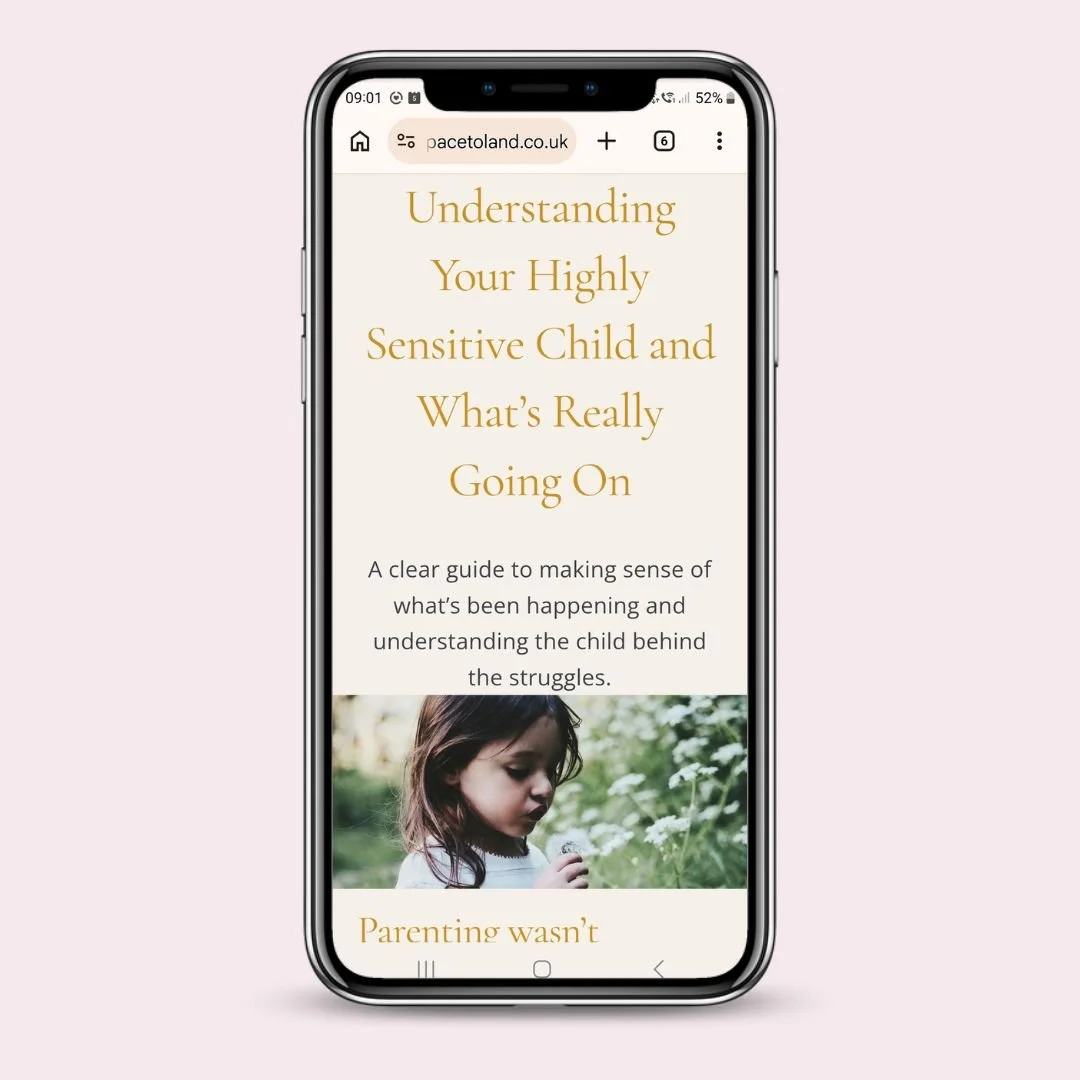
It will help you look beneath the reactions and struggles you're seeing and begin to understand the child behind them.
And if you'd like to go further, you can explore Safe Space to Land, my online programme for parents who want to understand their highly sensitive, deep-feeling child more deeply and feel much clearer about how to support them.