

A gentle reflection on the current debate for anyone whose diagnosis has finally helped things make sense, or who is wondering whether autism might explain their own or their child’s experience.
If you’ve been anywhere near the autism conversation online recently, you may have noticed that things have become rather heated.
Most recently, Dame Uta Frith, one of the most influential figures in autism research, has spoken publicly about her belief that the autism spectrum has expanded to the point where the diagnosis risks losing its meaning.
The debate has become particularly heated following her comments about naturalist and broadcaster Chris Packham, who was diagnosed in 2005. Frith said that, in her opinion, his ability to communicate so brilliantly was incompatible with autism.
She has questioned whether some people who are now diagnosed would historically have been considered autistic, and has raised concerns about what she sees as misdiagnosis.
Understandably, many autistic people have reacted very strongly to this.
There is a growing debate about whether autism is now being diagnosed too widely, whether the spectrum has become too broad, and whether some people who are being diagnosed are really autistic at all.
I’ve been watching the conversation too, and as someone who supports autistic adults and families, I’ve found myself thinking less about the argument over who is “really” autistic and more about something much deeper:
… What happens to a person when they have spent their entire life being told, in one way or another, that their experience isn’t real?
Because for many people, an autism diagnosis isn’t about acquiring a label. It is about finally finding an explanation.
As well as working with families, I work with autistic adults, many of whom were late diagnosed. And one of the things I hear again and again is “my whole life suddenly makes sense…”
Why school was so exhausting… Why friendships felt so complicated… Why I could cope brilliantly until suddenly I couldn’t… Why I’ve always needed so much recovery time… Why ordinary environments were sometimes completely overwhelming… Why I can seem perfectly capable one day and completely unable to function the next…
Why I spent so much of my life watching other people, working out what was expected, copying, adapting and trying to get it right. Why life always felt less comfortable, less natural and less accessible…
For so many of my clients young and old, diagnosis has brought enormous relief and a profound sense of “this is me". But I’ve also witnessed a lot of grief and even anger… sometimes all of these things at once.
It’s a rollercoaster that so many people are going through and the diagnosis becomes a framework through which years or even decades s of experiences suddenly make sense.
It isn’t , “I have a label”, but rather, “I can finally believe myself after a lifetime of sensing something is for different for me.”
And I think that distinction matters enormously in the current conversation.
With my clients I’ve found again and again that something hugely debilitating happens when you stop trusting your own experience. They learned, over many years, that it’s not safe to be them. And for some, to feel totally detached from themself.
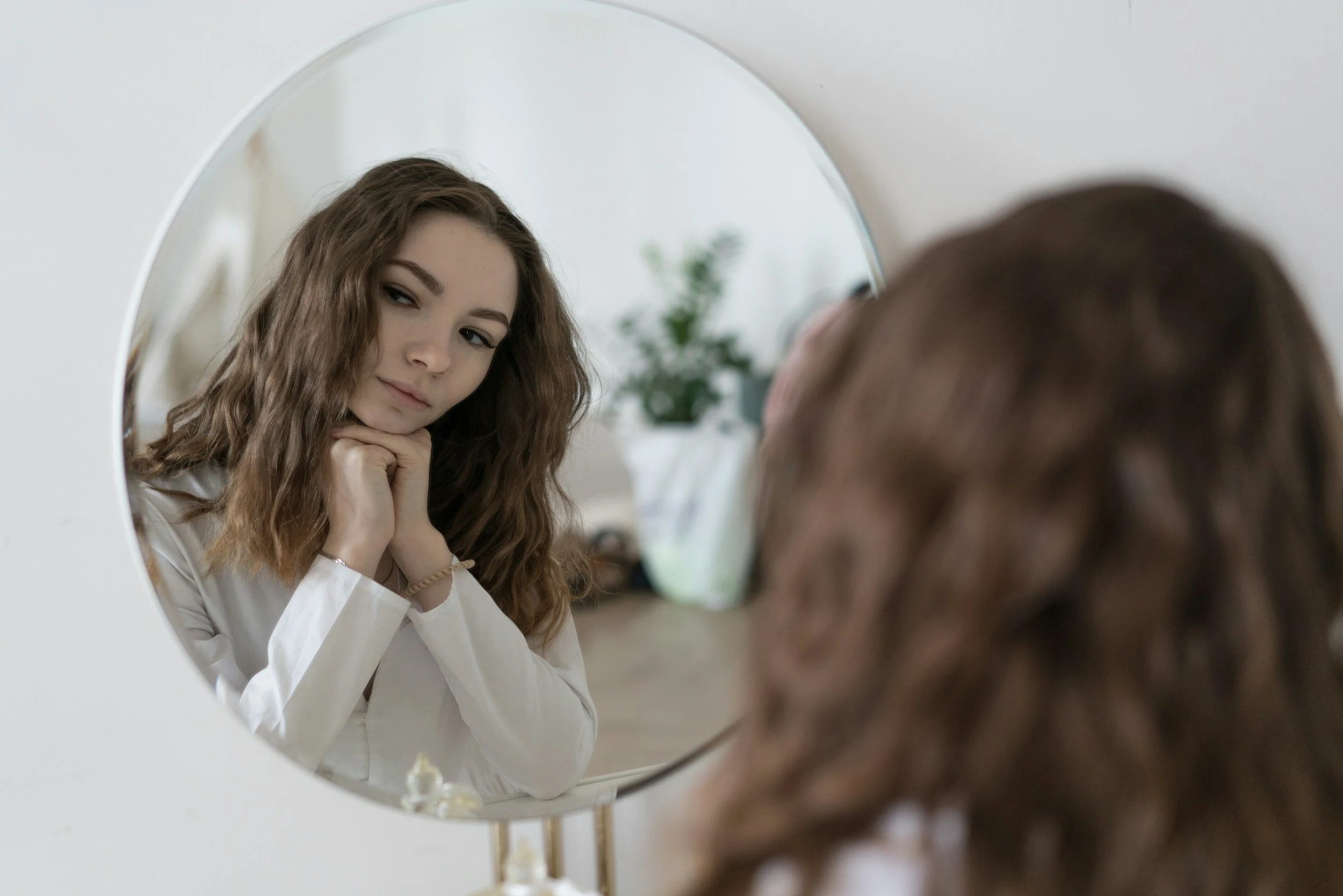
In early life a child doesn't necessarily know why something feels so overwhelming. They just know that it does. The noise is too much. The classroom feels exhausting. The birthday party becomes overwhelming. A change they weren't expecting feels enormous. Social situations can be confusing or take far more effort than they seem to for other people. Their nervous system is telling them that something is too much, even if they don't have the words to explain it.
But if nobody around them understands that experience, they can very easily start to believe that the problem is them. They might hear: “You’re fine, don’t be silly.” “You’re too sensitive.” “You’re overreacting.” “Everyone else manages.” “You’re being difficult.” “You’re being nasty”. “You just need to try harder.” “Be more confident in yourself”. “There’s nothing wrong with you. “You just need more resilience.”
Autism is a complex inner experience, not a black and white checklist of ‘behaviours’ or a reflection of character.
When a child has a very real experience happening inside them, but the people around them don’t reflect that experience back, something profound can happen: they stop trusting their own experience.
“This is overwhelming for me” becomes “Why am I so pathetic?”
“I need a moment to recharge” becomes “I should be able to cope.”
“Something about this environment isn’t working for me” becomes “Something is wrong with me.”
And gradually, they can become very good at ignoring their own needs and feelings.
They monitor everybody else, read the room, anticipate, adapt. They mask, they override, they perform. They become highly skilled at understanding what everyone else needs from them while becoming increasingly disconnected from what they need themselves.
This is a deeply sad and less visible reality we need to recognise and something I have seen repeatedly in my work with both adults and families.
When adaptation becomes your way of surviving
This is also why I think we need to be very careful when we look at an autistic person’s life from the outside and assume that what we see tells us how difficult their life is/ has been.
Some autistic people develop extraordinary compensatory strategies. They learn how to navigate university, build careers, make friends, get married and have children. They may become doctors, nurses, teachers, therapists, scientists, lawyers, artists, musicians, entrepreneurs or academics. They can be funny, articulate, warm, socially capable and highly successful.
And yet none of that tells us what it has taken to get there.

The question shouldn’t be “what can this person do?”, but rather “what does it cost them to do it?”
Because functioning and functioning easily are not the same thing.
Achievement and being unaffected are not the same thing.
Communication and finding communication effortless are not the same thing.
Having friends and finding relationships easy to navigate are not the same thing.
Having a career and being free from disability are certainly not the same thing.
Someone can hold down an impressive career while spending every evening completely depleted.
Someone can have a busy social life while spending enormous amounts of energy monitoring those relationships or struggling to keep up. Or for others it’s all optics, appearing socially connected on the outside, while very little about their social world actually feels meaningful or aligned with who they are.
Someone can parent beautifully while being deeply affected by sensory overload, unpredictability and the relentless demands of family life.
Someone can look as though they are coping brilliantly, while living incredibly close to the edge of what they can sustain. You might not see the days they lose to exhaustion and the time needed to recover, after giving more of themselves than their unique nervous system has the capacity for.
And sometimes, eventually, the cost becomes impossible to keep paying. That can be when burnout, shutdown, anxiety, depression, physical exhaustion or very real physical health difficulties begin to emerge.
The effects of living for years in a state of constant adaptation and nervous-system strain aren't always psychological; sometimes they show up in the body too.
But what about people with profound support needs?
This is where I think the current debate becomes particularly painful and I’ve personally found it so hard to witness all the in-fighting within the autistic communities.
There are absolutely autistic people whose support needs are profound. Some need lifelong care. Some have very significant communication difficulties. Some cannot live independently. Some need substantial help with almost every aspect of daily life.
For their parents and carers, they are living every day with the reality of profound disability. I can completely understand why it might be incredibly difficult to look at an autistic adult with a career, friends, a partner, children and a seemingly independent life and think:
“How can these two experiences possibly belong under the same diagnosis?”
I think that question reflects just how hugely different autistic lives can be.
Perhaps this is where we need to move away from asking, “who is more autistic?” and instead ask, “what are this person’s support needs, and what is making life difficult for them?”
Because these are not necessarily the same thing.
One person may need 24-hour lifelong support. Another may need significant sensory accommodations, flexibility, recovery time, help with executive functioning, support through burnout or an environment that is much better adapted to their sensitive nervous system.
These are profoundly different lives, but one doesn’t invalidate the other.
At the moment, there seems to be a growing divide within the autistic community itself.
Some people are saying, “If you have a career, friends, a relationship or children, you can’t possibly be autistic, it must be something else.” Others are suggesting that diagnosis is a fad or an excuse and even saying, “if you don’t have profound support needs, you don’t understand what autism really is.”
And neither position captures the whole picture. It’s messy, complex, painful and confusing, and I think for many people, it’s incredibly difficult to know how to navigate all of this right now.
There are autistic people who cannot work. There are autistic people who work but cannot sustain it without enormous cost. There are autistic people who have no friends, and autistic people who have lots of friends but find maintaining those relationships exhausting. There are autistic people who live independently, and autistic people who technically live independently but need considerable support to do so. There are autistic people who communicate very little, and autistic people who communicate exceptionally well.
The existence of one experience doesn’t make another experience less real.
We need to stop comparing the degree to which different people appear to struggle. But I also think we need to understand why this can be such a difficult conversation for parents and carers of people with profound support needs. When your reality is one of lifelong, intensive care, it can be incredibly difficult to understand how someone who has a career, relationships and an apparently independent life can also be significantly affected by autism.
Perhaps there is a case for a more nuanced way of describing autism, or even different diagnostic categories, so that we can better reflect the enormous range of experiences and support needs?
But questioning whether the diagnosis is too broad is very different from telling people that their experiences aren't real.
What we see isn’t always the whole story
I personally find advocacy increasingly difficult because it’s just become so messy and such an emotionally charged and complex topic.
But what I most want people to take away from all of this is that we can’t judge someone’s level of difficulty by what they can visibly accomplish. Nor should you question your own diagnosis and lifelong experience.
I think that sometimes, the better someone becomes at compensating, the less affected they appear to the outside world.
And this is the paradox: the person who looks like they are coping the best may actually be the person working the hardest to hold everything together and therefore potentially the person most at risk of eventually reaching the limits of what they can sustain.
I’m not suggesting that every successful autistic person is secretly falling apart, as I know this to not be true. Autistic people are as individual as anyone else. Some genuinely find ways of building lives that suit them beautifully. Some have supportive relationships, environments that work for them, careers that play to their strengths or a strong network of neurodivergent friends who they feel safe to be themselves around.
We shouldn’t assume that success itself is evidence that someone isn’t struggling or can’t possibly be autistic.
I’ve worked with so many autistic individuals who have spent a lifetime learning to present a version of themselves to the world that they think others want to see and compensating for the things that don’t come naturally.
But this comes at a huge cost, not only in terms of the energy expended and the burnout or chronic exhaustion that often shows up… but also to their sense of self. After years of trying to live in a world that didn’t understand their needs, while being taught to distrust their own experience.
Imagine spending your childhood feeling overwhelmed by things other people don’t seem to find difficult and slowly developing an inner narrative that you are different, flawed, or simply need to push yourself harder.
Imagine repeatedly believing you’re too sensitive, too intense, too shy, too difficult, too quiet, too much, or simply not trying hard enough.
Imagine learning that the safest way to belong is to become very good at hiding the parts of yourself that don’t seem acceptable.
You learn to perform, to achieve and to perfect yourself. You learn to watch, to copy and to mask. You learn to anticipate, to override your body’s signals and to become whatever the environment requires.
And eventually, you may become so skilled at adapting that you don’t really know where the adaptation ends and you begin.
This is something I’ve witnessed repeatedly in my work. People describing a profound sense that they aren’t quite real. Their experience was never really recognised as valid or given space to be understood. And for many, this has left them not even feeling fully present in their own body, and not knowing what they actually need anymore.
Total self-abandonment.
When your experience is repeatedly denied, you can eventually learn to deny it yourself.
And I think this is one of the reasons that a diagnosis can be so much more emotionally significant than people realise. And this is why I feel so sad about the suggestion that people are simply looking for a label, an excuse or something fashionable to explain themselves.
Of course diagnoses can sometimes be wrong. Of course we should have rigorous assessment. Of course other explanations need to be considered. There is nothing wrong with questioning and refining our understanding of autism. But…
We need to remember what many people are actually seeking when they pursue an assessment…
They aren’t looking for a label or an excuse. They are looking for an explanation for something they’ve spent a lifetime desperately trying to understand. And a way of finally making sense of their own experience.

They’re looking for the missing piece. They’re looking for a way of making sense of the child they were. They’re looking for an explanation for why life has often felt so much harder than it seems to for other people.
They’re looking for a reason that doesn’t involve concluding, “There must be something wrong with me.”
And when they finally find it, something extraordinary can happen. They can begin to reinterpret their past, understand their needs and stop fighting themselves quite so hard.
Perhaps this is why the current conversation feels so painful?
For some autistic adults, coming to understand themselves has been a very long journey. It may have taken years to recognise the possibility of autism, years to overcome the fear of being wrong, and years to finally say, “This might actually be me.”
For some, it has felt like finally coming out of a closet they didn’t even realise they were in.
And now, just as they are beginning to step into that understanding, they’re hearing: “Are you sure?” “Is autism really the right explanation?” “Maybe you’re just anxious.” “Maybe you’re just highly sensitive.” “Maybe you’re just a bit quirky.” “You have a career, so how can you be disabled?” “You have friends, so you can’t really be autistic.”
For someone who has spent a lifetime being told not to trust their own experience, that can land very deeply.
So where does that leave us?
We absolutely need better support for people with profound and lifelong support needs.
But we can hold all of these truths without invalidating autistic people whose autism looks different from the stereotype.
We can recognise that autism can be profoundly disabling while also recognising that disability isn't always visible.
We can acknowledge that some autistic people need lifelong, intensive support, while others may have built highly adapted lives that come at a significant hidden cost.
We can improve the way we assess and diagnose autism without making people ashamed to seek an assessment or creating suspicion around every adult diagnosed later in life.
We can recognise that anxiety, trauma, ADHD, OCD, personality disorders and other experiences can overlap with autistic characteristics without assuming that someone has to choose one explanation over another.
And we can fight for better services for people with profound support needs without making autistic people who work, communicate well or live independently feel that they somehow don't belong under the same umbrella.
I think/hope we’re in the thick of a huge paradigm shift…
For a long time, autism was understood through a relatively narrow and hugely stereotyped lens. But now this is changing and more and more autistic people are speaking out about their experiences: including more females, late-diagnosed adults, people who learned to mask, people who developed sophisticated ways of compensating, people who were able to build careers and relationships while struggling profoundly in other areas, and people who were overlooked because what was happening internally wasn’t obvious from the outside…
That doesn’t necessarily mean the old understanding was completely wrong, it may simply mean our understanding is expanding. And perhaps that is what feels so uncomfortable right now?
When a paradigm changes, there is inevitably friction. But perhaps the intensity of the current conversation tells us something too. Autistic people are speaking about their own lives more openly than they ever have before, and perhaps that is progress?
If you are a parent wondering about autism
Firstly, I’m sending huge love and compassion your way. I know how challenging life must currently feel if you are questioning this.
Please don’t feel that your child has to fit somebody else’s picture of autism before you’re allowed to explore the possibility.
You don’t need to prove that your child’s difficulties are “bad enough” either and your child should not be compared with anyone else.
An assessment isn’t about a label, it’s an attempt to understand the very core of who your child is and what they need.
A knowledgeable and up to date assessor will look beneath the surface and consider the whole picture, not just what your child can do, but how they experience the world, what things cost them, and where they may be compensating or masking.
This understanding can change how you and others respond to them, what is expected from them and most importantly how they understand themselves.
And it can help you or others stop interpreting difference as defiance or a lack of resilience, sensitivity as weakness or something they need to ‘switch off’, or a distressed response as simply ‘anxious’, ‘bad’ or chosen behaviour.
And if you’re an autistic adult feeling shaken by all of this
I equally want to send huge support and love your way. And most of all I want you to know that you don’t owe anyone an explanation.
It’s been hard enough getting your own head around all of this, it’s not your job to justify your reality to anyone who is doubting it.
And you don’t need to demonstrate your suffering to earn your diagnosis
And having a career, friendships, relationships or a good life does not mean you can’t be legitimately autistic. It can be true that alongside this you can also really struggle.
And you don’t need to deny the parts of autism that are genuinely difficult simply because you have learned to cope with them on the surface. Your competence doesn’t erase your struggles.
But if your life doesn’t look like that right now, I want you to know that this doesn’t mean those things are necessarily out of reach for you. It’s complex, it’s messy and it’s deeply misunderstood, but please don’t give up hope that you can find a life that works for you.
Perhaps the most helpful question isn’t:
“Do I look autistic enough?”
It’s:
“Does this way of understanding myself make sense of my life and how I need to live it?”
And if it does, perhaps the focus now could simply be to become curious about yourself again:
What do I actually need?
What feels good to me?
What drains me?
What have I been doing because I genuinely want to, and what have I been doing because I learned I had to?
Where do I feel most like myself?
Where do I feel I have to perform?
And slowly, perhaps, you can begin to come back to yourself, but not because the diagnosis has told you who you are. But because it may finally have given you permission to believe your own experience.
There is room for more than one autism story and I think we need to make room for them all…
For the autistic child who will need lifelong care. For the autistic adult who has never been able to sustain employment. For the person who has a career but is exhausted by the effort of maintaining it. For the person with a huge circle of friends. For the person who has spent most of their life feeling completely alone. For the person diagnosed at four. For the person diagnosed at forty-four. For the person who communicates without words. For the person who can speak beautifully about their inner world. For the parent fighting desperately for their child’s support. For the adult fighting desperately to be believed…
What if we stopped judging the reality of someone’s experience by how successfully they’ve learned to hide it?
Because sometimes the person who looks as though they’re coping beautifully has spent their entire life learning how to survive. And sometimes, the most important part of diagnosis isn’t being given a name for your differences.
It’s finally being able to say:
“I wasn’t imagining it.”
“I wasn’t simply too sensitive.”
“I wasn’t failing at being a person.”
“I was never broken, wrong or inadequate”
“My experience was real.”
And perhaps from there, for the first time, you can begin to ask a different question:
“What would it be like to build a life that doesn’t require me to disappear from myself in order to live it?”
I’ve sat with people who are only just beginning to realise how much of their life has been spent disconnected from themselves. I’ve watched how difficult it can be to work out what they actually feel, want or need when they’ve spent decades being told (directly or indirectly) that their responses are the problem. And I’ve seen how much courage it can take to start trusting themselves again.

And perhaps that is what the word spectrum should not be seen as a straight line from “very autistic” to “barely autistic”. But rather a vast and complex range of different needs, strengths, vulnerabilities, adaptations and ways of experiencing the world.
Because for many people, being able to finally say “this is why” has been one of the most important parts of understanding their entire life.
And I don’t think we should underestimate the power of that.
About Sarah
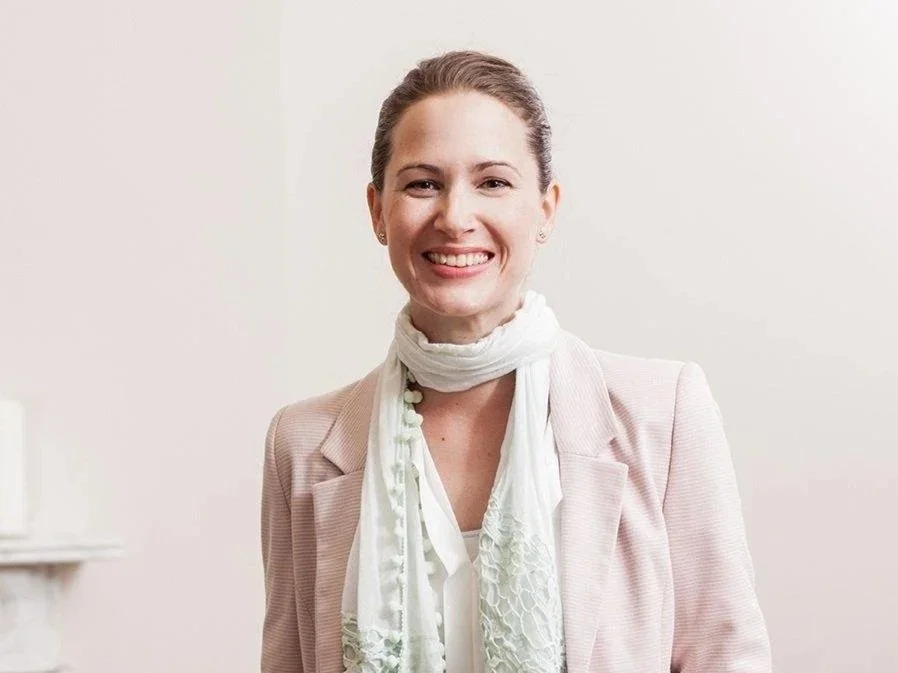
Sarah Weaver is an Emotional Health Coach and Psychotherapist specialising in neurodivergence and highly sensitive children and adults.
Sarah brings both professional experience and lived experience to her work, supporting people to better understand themselves, build self-trust and find ways of living that feel happier, calmer, more manageable and authentic.
She works with adults, parents, children and families, with a particular interest in nervous system regulation, masking, burnout, self-understanding and the often invisible cost of trying to fit into a world that wasn’t designed for you.