
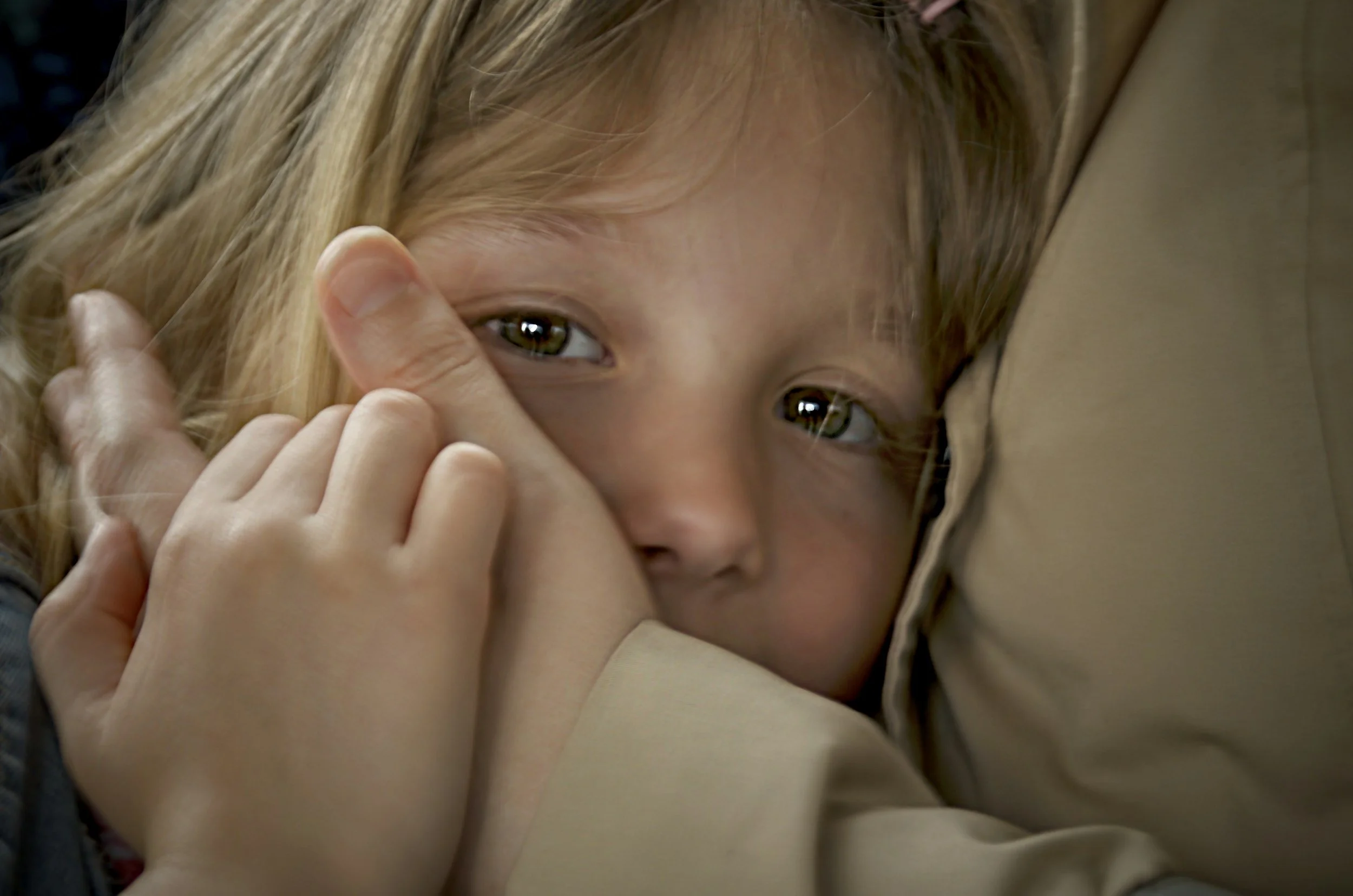
Why some children become frightened not only of being sick, but of how they'll feel if it happens, and whether they'll be able to cope without you.
Perhaps your child is frightened of being sick. But when you look a little closer, you begin to notice that the fear seems to have grown into something much bigger.
They worry about feeling sick at school, being away from home or what might happen if they start to panic when you're not there. They notice every little sensation in their body and ask repeated questions, desperate to know that everything will be okay.
You might find yourself wondering why the possibility of being sick feels so frightening, and why your child seems particularly distressed by situations where you won't be there to help.
To understand what's happening, it can help to look beyond the fear of vomiting itself.
What if the fear isn't just about being sick anymore?
In my work supporting children with emetophobia, I've noticed a pattern that can be particularly relevant for some highly sensitive, deep-feeling and neurodivergent children.
The fear can gradually become about more than vomiting. It can become about how frightening the experience might feel, what might happen if they become overwhelmed, and whether they'll be able to cope if their safe person isn't there.
For these children, the thought of being sick at home with Mum or Dad nearby may feel very different from the thought of being sick at school, on a bus or somewhere they can't easily get help.
The underlying question may be something like:
What if it happens when you're not there? How on earth will I get through it on my own?
This doesn't necessarily mean that the child is consciously thinking in these terms. They may simply feel frightened, become distressed about being away from you or insist that you reassure them that they won't be sick.
But understanding this possibility can help explain why emetophobia sometimes spreads into so many areas of a child's life, and why reassuring them that they probably won't be sick doesn't always resolve the fear.
When a frightening experience leaves a lasting impression
For some children, emetophobia develops following a sickness bug or another frightening experience of being sick.
Being sick can be an intensely unpleasant physical experience. You feel unwell, your body does things you can't necessarily control, and you may not know when the experience will end.
For a child who experiences sensations and emotions particularly deeply, this can feel especially overwhelming.
Afterwards, something can change.
The child may become much more aware of what's happening inside their body. They start noticing sensations they previously wouldn't have thought twice about, watching carefully for any sign that they might be about to feel sick again.
A tummy ache becomes a possible warning. Feeling full after eating raises questions. A passing sensation of nausea can set off a chain of anxious thoughts.
What if I'm going to be sick? What if it's happening again?
The child is trying to protect themselves. If they can spot the signs early enough, perhaps they can prepare themselves or prevent the frightening experience from happening again.
But the more attention they give to their body, the more noticeable those sensations can become. And when an ordinary sensation feels like a possible sign of danger, it can be difficult not to become even more watchful.
For some children, this is how the cycle begins.
Of course, emetophobia doesn't always start with a particular experience, and heightened bodily awareness can develop for different reasons. Every child's experience is individual.
But understanding what may have started the fear can be an important first step.
When the child becomes frightened of how they'll feel
As the fear develops, something else can happen.
The child begins to anticipate not just the physical experience of being sick, but the distress that might come with it. They may remember how awful it felt, the uncertainty, the feeling of being unable to control what was happening, or simply how overwhelming the whole experience seemed.
Now, the thought of being sick brings with it the anticipation of those feelings.
They might worry about feeling panicky, becoming overwhelmed or not knowing what to do if their anxiety takes hold.
The questions begin to change.
What if I feel sick?
What if I start to panic?
What if I can't calm myself down?
What if it feels as horrible as last time?
This is sometimes described as a fear of fear itself. The child isn't only anticipating the original experience; they're also anticipating their own emotional response to it.
For highly sensitive children, these feelings can be particularly intense. They often experience fear, uncertainty and distress very deeply. And when a feeling is that powerful, the thought of experiencing it again can be frightening in itself.
It's not simply that they don't want to be sick. They may be desperately trying to avoid the intensity of their emotions, particularly if they aren't sure they could manage those feelings if they happened again.
But there's another important question here: what if the child doesn't believe they can manage those emotions without someone there to help them?
This is where the fear of being sick can become closely connected with the fear of being away from a parent.
Why being away from you can become part of the fear
When your child feels frightened, you may be the person they turn to for reassurance, comfort and help making sense of what's happening.
You know what to say. You understand their worries. You can help them through a difficult moment.
And when you're there, your child may feel much more able to manage.
There's nothing wrong with this. Children need the support of their parents, and knowing that someone they trust is there for them can make difficult experiences feel less overwhelming.
But sometimes, a child can gradually begin to associate their ability to cope with having their parent nearby.
They may feel that they can manage their fear when Mum or Dad is there, but that they won't be able to manage it alone.
The possibility of being sick then carries an additional worry: not only what if it happens?, but what if it happens when you're not there?
The child might wonder:
What if I'm sick at school and Mum isn't there?
What if I panic on a school trip?
What if I need help and nobody knows what to do?
What if I can't cope without you?
For some children, this becomes one of the most frightening aspects of their emetophobia.
They may become increasingly alert to situations where they could be away from their safe person. School, sleepovers, journeys, trips or activities where they can't easily reach a parent can all start to feel threatening.
Sometimes, they desperately want to take part. They may want to go to school, enjoy a trip or spend time with friends. But the thought of feeling frightened or unwell without you there feels too much.
The fear can begin to affect their confidence about being away from home, even when there is no immediate reason to think they will be sick.
The fear has grown beyond the possibility of vomiting. It's become entangled with the question of whether they will be able to cope if something frightening happens and their safe person isn't there.
This doesn't mean that every child with emetophobia has separation anxiety, or that separation is always the original source of the fear. For some children, the fear of being sick is the main concern. For others, the prospect of facing it without a trusted adult becomes an important part of what keeps the fear going.
Recognising which pattern fits your child matters, because it helps us understand what they may need in order to move forward.
And it certainly doesn't mean you've done anything wrong by offering comfort and reassurance. You've been responding to a child who is genuinely distressed, doing what comes naturally when someone you love is frightened.
The difficulty is that your child may not yet trust their own ability to manage difficult feelings when you're not immediately available to help.
How the different fears can begin to feed each other
Once these worries become intertwined, it's easy to see how the fear can gather momentum.
Your child worries about being sick. They become alert to sensations in their body. Those sensations trigger more worry, which makes it harder to stop monitoring themselves.
They begin thinking about where they might be if they felt sick, whether you would be there and what they would do if they needed help.
They seek reassurance to feel certain that everything will be okay. They may avoid situations where they fear they could feel unwell or become overwhelmed without you nearby.
And when reassurance or avoidance brings relief, the child may understandably conclude that they were right to be worried, and that they needed those things to stay safe.
The next time they face a similar situation, the fear can feel just as powerful, or even more so.
The child may become increasingly reliant on knowing that they won't be sick, that their body feels okay, that they can get to you if they need to, or that you will be available to help.
But life can never offer complete certainty. And the more a child feels they need that certainty before they can feel safe, the harder it can become to manage the ordinary unpredictability of life.
Their world may gradually become smaller as they try to avoid not only the possibility of being sick, but also the uncertainty, distress and separation they associate with it.
For parents, this can be incredibly difficult to watch
You may find yourself answering the same questions repeatedly, thinking ahead to every possible trigger or changing plans because you know how distressed your child might become.
Perhaps you reassure them that they won't be sick, promise that you'll be there to collect them if they feel unwell, or help them avoid situations they find frightening.
You might find yourself constantly weighing up whether to encourage them to carry on or let them stay home, whether to answer another question or gently change the subject, and how to help without making things harder in the long run.
It's exhausting trying to work out what's best when all you want is for your child to feel safe.
And when you see how frightened they are, it's natural to want to make things easier.
But if your child increasingly feels they can only cope when you reassure them or when you're close by, they may have fewer opportunities to discover that they can manage difficult feelings themselves.
This doesn't mean you've done anything wrong by offering comfort and reassurance. Your child needs to know you're there for them. The aim is to help them develop confidence in their own ability to cope, while continuing to feel secure in your relationship.
Helping your child discover that they can cope
The answer isn't to suddenly withdraw reassurance, insist your child faces everything they're frightened of or leave them to manage their anxiety alone. Instead, the starting point is understanding what the fear means to your child.
Are they most frightened of the physical experience of being sick? Is it the uncertainty of not knowing whether it will happen, or the prospect of feeling overwhelmed? And how much does their confidence depend on knowing you'll be there to help?
These questions matter because two children can both experience emetophobia while needing different kinds of support.
Once you begin to understand what's happening beneath the surface, you can help your child approach their fear in a way that makes sense for them. That means acknowledging their feelings without treating every frightening thought as a sign of danger, and responding to reassurance-seeking in ways that support progress rather than keeping the cycle going.
It also means gradually helping your child discover that a bodily sensation doesn't automatically mean they're going to be sick, that an anxious thought isn't a prediction, and that they can experience uncertainty without having to resolve it immediately.
For a child who believes they need their parent beside them to manage their fear, an especially important part of this process is discovering that they can cope even when you aren't immediately available.
This doesn't mean they must manage everything alone, or that support should be removed before they're ready. It means helping them build trust in their own abilities while continuing to experience you as someone they can turn to when they need you.
Little by little, they can begin to take part in life without needing to feel completely certain or know that you can be there immediately before they feel able to move forward.
Understanding your child can change the way forward
When a child struggles with emetophobia, it's easy for everyone to become focused on the fear itself: the questions, the checking, the avoidance and the distress.
But understanding what's happening beneath the surface can help you respond to more than the visible worry. Your child may not simply be frightened of being sick. They may also be frightened of how overwhelming the experience could feel, of not knowing what to do, or of facing it without you there to help.
When you begin to understand your child's particular fears, you can feel less as though you're constantly firefighting and more confident about how to support them. Rather than trying to find the perfect reassurance or anticipate every possible difficulty, you can begin to help your child develop the confidence they need to move forward.
The aim isn't simply to help your child feel less frightened of being sick. It's to help them develop confidence in their ability to cope, including when you're not there, so that fear no longer has to dictate what they can do or where they can go.
If you're trying to understand what's happening for your child and would like support, you can learn more about my support for children with emetophobia here.
Looking for support with your child's emetophobia?
I have over a decade of experience supporting children with emetophobia and their families. My approach looks beyond the visible fear to understand each child's individual experience, uncover what's fuelling the fear and help them work towards overcoming it.
I also help parents understand what's happening beneath the surface and how they can support their child's progress at home.
If you'd like to learn more about how I work with highly sensitive, deep-feeling and neurodivergent children experiencing emetophobia, you can find out more on my emetophobia support page.
New Programme Launching in January 2027:
Emetophobia: Taking Back Your Power.
This programme combines powerful online material with personalised one-to-one support to give you a deeper, understanding-led approach to helping your child overcome emetophobia.
By helping both child and parent understand the fear and their child's unique emotional world, I help families work together to break the cycle of fear, build lasting confidence and give children back their freedom.
Register your interest below to hear more and be among the first to hear about the launch and access exclusive, limited-time launch offers.